"Jew & Gentile One in Messiah"

As it was in the beginning so it will be in the end-of-days


H4150  מועדה / מעד / מועד

mô‛êd / mô‛êd / mô‛âdâh

BDB Definition:

appointed place, appointed time, meeting , sacred season, set feast, appointed season

Psa 81:3 Blow the trumpet at the new moon, At the full moon, on our feast day. (CJB)

At Beth Goyim Messianic Congregation we follow what Adonai has set forth as HIS Way.

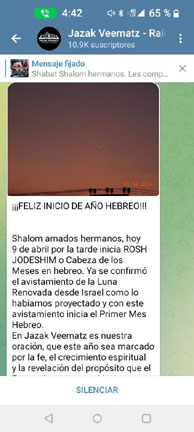
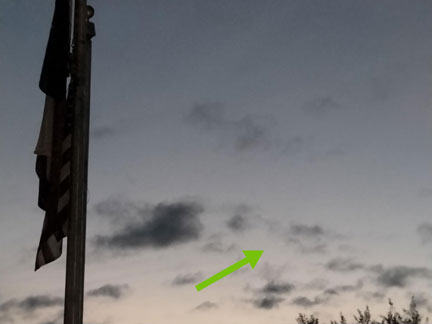
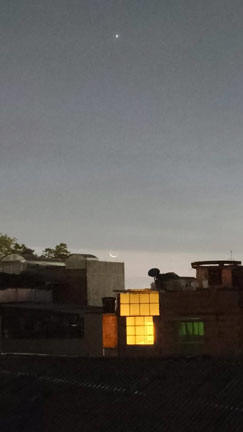
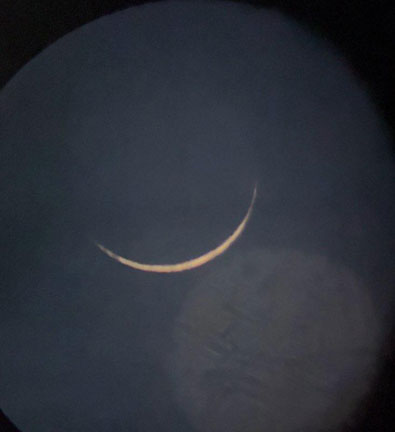
The new month cannot begin until the new moon is sighted in Adonai's Holy City Jerusalem.

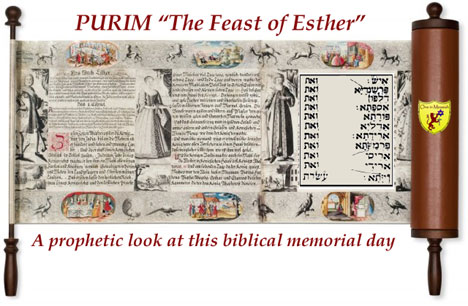
Purim (The Feast of Ester)


PURIM PLAY Sunday February 24, 2013 11AM

Est 9:19 This is why the Jews of the villages, those who live in unwalled towns, make the fourteenth day of the month of Adar a day for celebrating and rejoicing, a holiday and a time for sending each other portions [of food].

Rosh Chodesh New Moon festival "New Year" celebration
Look for the moon on after 7PM, March 12, 2013

Exo 12:2 "You are to begin your calendar with this month; it will be the first month of the year for you.

Exo 12:3 Speak to all the assembly of Isra'el and say, 'On the tenth day of this month, each man is to take a lamb or kid for his family, one per household —

Pesach (Passover) NO WORK Lev 23:5

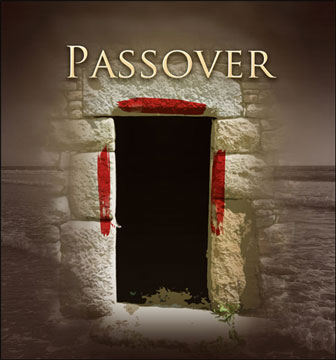
Passover begins at sundown 7:00 PM Special Service Tuesday, March 26, 2013 at dusk

Lev 23:5 " 'In the first month, on the fourteenth day of the month, between sundown and complete darkness, comes Pesach for Adonai.

Feast of Matzah NO WORK Lev 23:6

March 27, 2013

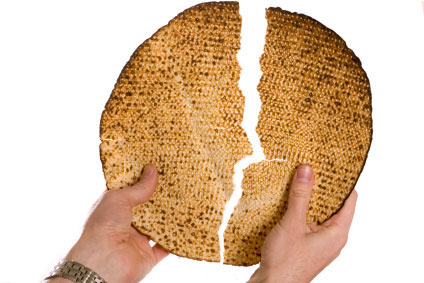
Lev 23:6 On the fifteenth day of the same month is the festival of matzah; for seven days you are to eat matzah.

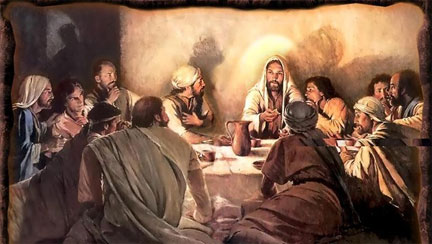
Yom Hobikkurim Feast of First Fruits (Resurrection Day)

Special Service Saturday, March 30, 2013 at sundown 7:18PM

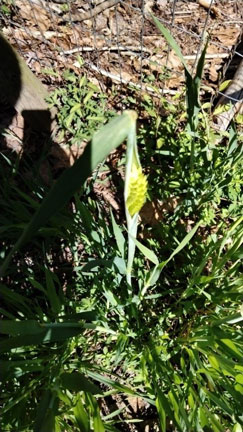
Lev 23:10 "Tell the people of Isra'el, 'After you enter the land I am giving you and harvest its ripe crops, you are to bring a sheaf of the firstfruits of your harvest to the cohen. Lev 23:11 He is to wave the sheaf before Adonai, so that you will be accepted; the cohen is to wave it on the day after the Shabbat.

Feast of Matzah NO WORK

Special Service April 1, 2013 at sundown

Exo 12:18 From the evening of the fourteenth day of the first month until the evening of the twenty-first day, you are to eat matzah. Exo 12:19 During those seven days, no leaven is to be found in your houses. Whoever eats food with hametz in it is to be cut off from the community of Isra'el — it doesn't matter whether he is a foreigner or a citizen of the land.

Deu 16:8 For six days you are to eat matzah; on the seventh day there is to be a festive assembly for Adonai your God; do not do any kind of work.

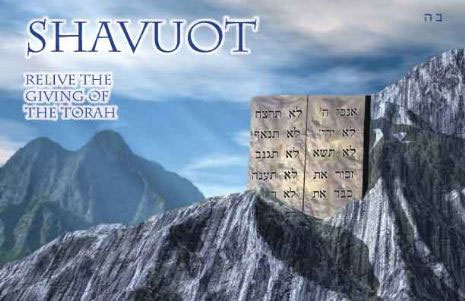
Shavuot (Pentecost) No Work Lev 23:21

Shabbat double service 11AM & 7:30PM Special Service Saturday, May 18, 2013

Lev 23:15 " 'From the day after the day of rest (SHABBAT) — that is, from the day you bring the sheaf for waving — you are to count seven full weeks, Lev 23:16 until the day after the seventh week; you are to count fifty days; and then you are to present a new grain offering to Adonai.

Days of Awe Sounding of the Shofar (Beginning of the Month of Elul)


About the Rosh Chodesh

Shalom.

I pondered something over the last 48 hours (9/18/12). It was bugging me why there was such division about the Rosh Chodesh.

I was wondering why my son Connor had 2 days off from tech. school for Rosh Hashanah? The school that is run by Orthodox Jews.

I was wondering why William in NC (on with us via skype each week) saw the new moon at 2:39 AM (Sunday) and the people in Israel for sighted moon did not on see the moon on a clear night in Jerusalem.

I was wondering why the Jews around the globe were celebrating Rosh Hashanah on Sunday night? Even Benjamin Netanyahu sent out a “news year’s greeting” on Sunday.

I was wondering why science said it was the new moon on Sunday evening but the sighted moon people said no it is not.

I said, I watched the moon myself all week.  I know the cycle and the new moon should be Sunday evening as long as it is clear in Jerusalem. ( I looked at numerous satellite imagery all day on Sunday up until 2055 hours Israel time)

I got a message from a very good torah Observant Messianic Jewish Sabra friend in Israel. Most of the time she is in southern Israel but this year she tells me yes we are celebrating tonight (Sunday) and we are with the family in Jerusalem. I did not ask to be told where she was.

 I remembered something deep in my mind about a rabbinic teaching, now I have my answer.


Two Days Rosh Hashanah, Eruvin And Eggs

http://www.jewishpress.com/judaism/halacha-hashkafa/two-days-rosh-hashanah-eruvin-and-eggs/2012/09/13/

 By: Raphael Grunfeld

Published: September 13th, 2012

Why is Rosh Hashanah, the Jewish New Year, so different from other Jewish holidays? On the face of it, it does not seem to follow any pattern. It is celebrated for two days, not only in the Diaspora but also in Israel. Yet the Sages refer to the two days of Rosh Hashanah as one long day – yoma arichta.

On Pesach, Shavuot and Sukkot we keep Yom Tov for two days because during the time of the Second Temple there was doubt whether the month preceding Yom Tov was a chodesh chaser of 29 days or a chodesh maleh of 30 days. But on Rosh Hashanah the doubt was exacerbated for the following reason: In the case of other festivals, such as Pesach, the emissaries the bet din dispatched to advise outlying districts of a chodesh chaser had 14 days to reach their destination. In the case of Rosh Hashanah, however, the emissaries had no time at all. In fact, as soon as the witnesses had testified on the 30th day of Elul that they had sighted the new moon, that very day was declared Rosh Hashanah. And on Rosh Hashanah the emissaries could not travel more than the techum Shabbat distance of two-thirds of a mile beyond Jerusalem. As a result, even people living inside Israel but outside of Jerusalem remained in doubt.

Even inside Jerusalem, confusion reigned. Nobody knew whether the witnesses who would testify to the sighting of the new moon would arrive on the day of the 30th, in which case Rosh Hashanah would be on the 30th day, or whether they would not arrive, in which case Rosh Hashanah would be on the 31st day. On the night immediately following the 29th day of Elul and on 30th day of Elul itself, people hedged their bets. They ceased work, went to the synagogue, recited the Rosh Hashanah prayers and blew the shofar, all in a tentative state of mind. Perhaps, they fretted, the witnesses will not come today, the 30th, and tomorrow, the 31st, will be Rosh Hashanah by default and a day’s work would have been wasted. But then again, perhaps the witnesses would come. So how could they risk working?

The Levites in the Temple fretted, too. If the witnesses would not arrive by Minchah time on the afternoon of the 30th, the Levites had to proceed to offer up the tamid, the afternoon sacrifice. But they did not know which Psalm to sing when doing so. Should they sing the special Rosh Hashanah Psalm, or the weekday Psalm? One year they chose the weekday Psalm only to see the witnesses arrive after Minchah and prove them wrong.

In this situation, the rabbis decided to dispel the doubt. They decreed that if witnesses would arrive after the afternoon sacrifice on the 30th day of Elul, their testimony would be ignored and the 31st day of Elul would be declared Rosh Hashanah. Furthermore, in order to provide certainty for the Levites and in order to prevent people from working on the 30th of Elul afterMinchah time, the rabbis merged the 30th day of Elul with the 31st day, declaring them both one long day.

From this decree on, the two days of Rosh Hashanah, unlike the two days of Pesach, Shavuot and Sukkot, were no longer celebrated out of doubt, but out of certainty. This distinction between the status of the two days of Rosh Hashanah and the two days of other festivals has practical ramifications. For example, on Rosh Hashanah, one may not extend the techum Shabbat 4,000 amot in two directions, as one may on the two days of Pesach, Shavuot and Sukkot. Because the two days of Rosh Hashanah are merged into one yoma arichta, only one eruv techumim could be placed for both days to walk 4,000 amot in only one chosen direction. Similarly, the argument that an egg laid on the first day of Pesach, Shavuot or Sukkot could be eaten on the second day of these festivals, would not apply. An egg laid on the first day of Rosh Hashanah could not be eaten on the second.

Following the destruction of the Second Temple, the dilemma of the Levites was no longer a concern. Accordingly, Rabbi Yochanan Ben Zakkai decreed that the testimony of witnesses arriving after Minchah on the 30th of Elul would once again be accepted, thereby rendering Rosh Hashanah one day. If witnesses did not arrive by nightfall of the 30th, Rosh Hashanah would be two days. Rabbi Yochanan Ben Zakkai’s decree did not, however, apply to the Diaspora, where it could not be known on the 30th day, whether the witnesses had arrived or not. Accordingly, in the Diaspora Rosh Hashanah remained two days, by decree. The Babylonian rabbis who came to Israel applied the same decree to the land of Israel, even after the time of Rabbi Yochanan Ben Zakkai.


Why are there two days of Rosh Hashanah even in Israel?

by Rabbi Naftali Silberberg


Rosh Hashanah is observed for two days, both in and out of Israel.

Biblically speaking the Holiday of Rosh Hashanah is just one day: the first day of the seventh month (Tishrei). However, biblically speaking the first day of the month is to be determined by the Rabbinical court in Jerusalem (not by the calendar). 

In ideal times, when the Holy Temple stood in Jerusalem, the day when the new month started was determined by witnesses who saw the new moon. A month in the Jewish (lunar) calendar contains 29 or 30 days1. If witnesses arrived on the 30th day of the month and testified that they had seen the new moon, then that day became the 1st day of the next month and the previous month ended up with only 29 days. If no witnesses arrived on that day, then automatically the previous month had 30 days and the next month would start on the 31st day.

Rosh Hashanah is observed two days even in the Land of Israel - as opposed to all other holidays which are only one day in Israel

As stated above, Rosh Hashanah is the 1st day of the month of Tishrei. So when the 30th day of Elul (the month before Tishrei) arrived, no one could know whether this day would end up being the 1st day of Tishrei (Rosh Hashanah) or the 30th day of Elul; it depended whether witnesses would arrive on that day. This causes problems with the daily prayers, sacrifices, etc.

So our sages instituted that we should observe two days of Rosh Hashanah -- the 30th and 31st day.2 In Temple times this could end up being either the 30th day of Elul and the 1st day of Tishrei, or the 1st and 2nd day of Tishrei (as Rosh Hashanah always is today). For this reason, Rosh Hashanah is observed two days even in the Land of Israel - as opposed to all other holidays which are only one day in Israel.3

Footnotes

·         1. Because the moon's monthly cycle is about 29 1/2 half days.

·         2. See Talmud Beitzah 4b-5a (and see Rashi on 5a).

·         3. All other holidays are later in the month, thus by the time they came around people in Israel already knew the correct first day of the month. Jews of the Diaspora, however, did not have this information and all of their holidays were therefore observed for two days. There is a difference in Jewish Law between the two days of Rosh Hashanah and the other two day holidays outside of Israel. Regarding Rosh Hashanah the holiness of the second day is not considered a rabbinical addition; rather the two days of Rosh Hashanah are officially considered as one long day.


Where in the written Torah text does it tell us explicitly that the first day of Tisrei is Rosh Hashanah? 
Nowhere. The Torah calls it "a day of shofar blowing." (This is one of many examples showing how our observance depends on the continuous oral tradition dating back to Mount Sinai). (Bamidbar 29:1)

Why, even in Israel, are there two days of Rosh Hashanah, whereas other festivals in Israel are celebrated for only one day? 
Before our current exile, we did not have a fixed calendar as we do today. Rather, the Supreme Torah court in Jerusalem determined our calendar on a month to month basis. They did this on the first day of every month, based on witnesses testifying that they had seen the new moon. Therefore, the people outside Israel had insufficient time to find out the exact date in time for the festivals. The "two-day festival" arose to correct this situation. In Israel, however, the people lived close enough to Jerusalem to find out the exact date of all the festivals except Rosh Hashanah. Since Rosh Hashanah occurs on the first day of the month, even those living in Jerusalem sometimes needed to observe it for two days, if the witnesses failed to arrive. 
http://ohr.edu/1229


At BGMC we try our best to stay as close to scripture as possible. We do our best to not follow rabbinic or manmade teachings. At BGMC we feel the people who say the moon was not sighted till Monday evening are following the above rabbinic traditions.

some questions to ask to those people who are the watchmen who are sighting the moon:

do you just sight the moon a dusk?

do you try to see the moon all night until sighted?

what if it is cloudy at dusk do you stay out all night till dawn looking?

if you sight the moon does it have to be longer than 5 seconds by the two witnesses?

is there a percentage you look for in the new moon or do you sight the black moon?

and finally ask them what are you scriptures to reference your answers.


In the service of Messiah,

Hanun ben Moshe

Messianic rabbi Andrew Dinnerman


Yom Teruah “Feast of Trumpets” (Yom Teruah)

NO WORK Lev 23:25

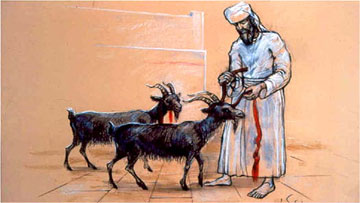
Yom Kippur (Day of Atonement)

NO WORK OR MARITAL RELATIONS Lev 23:29-30

Yom Kippur (Day of Atonement) Break Fast

 

Succoth (Feast of Tabernacles)

NO WORK Lev 23:35

Succoth (8th day Holy Convocation)

 NO WORK Lev 23:36

Chanukah (Feast of Dedication) Saturday December 8, 2012


We meet on the Lord's Day "Saturday"

Every Saturday at 11 AM for Messianic Worship & The Word

Bible Study Tuesday night 7PM

973-338-7800

We’ll be looking to see you this week at:

20-26 Industrial Ave. 2nd floor (there is an elevator)

Fairview, NJ 07022

 FREE parking

If you are looking for a solid teaching ministry, then you have found a home.

If you just looking for fluff and stuff this is not your place.

Statement of our Faith

This week's message

Discipleship TV The Remnant's Call TV show The Remnant's Call Radio show

Links

Holy days

MTT- Hebrew roots About us/Bio Mini Parash (Torah Portion) Teachings Charts Upcoming Events Videotracts Service times & Directions

Messianic rabbi Andrew

rebbitzen Kelly


Beth Goyim Messianic Congregation is a 501C3 not for profit organization

Beth Goyim Messianic Congregation is like the first congregation/church at Antioch. Jew and Gentile one in Messiah. So it was in the beginning so shall it be in the end. Knowing Yeshua (Jesus) the Messiah is not about religion it is about faith.

Learn about your Heritage. Yeshua “Jesus” is the same always and He never stopped being a Jew. Come and get back what Hasatan “satan” has stolen from you. If you are saved you are engrafted into the Hebrew Olive Tree. Come to Beth Goyim and see things from the original “Jewish” perspective.


CURRENT MOON


If you need to know what time is it in the world click here